
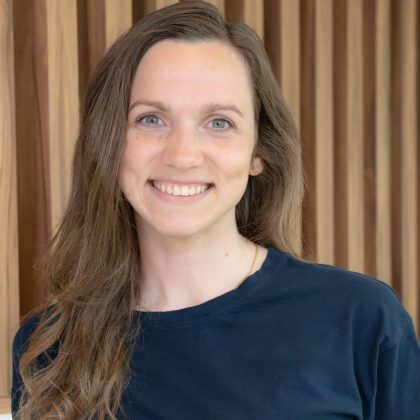
Laesa Kim – Parent partner, BC Children’s Hospital Research Institute, BC, Canada Laesa is a parent to a child with medical complexity and has long brought her written voice to share on that lived experience in social media and in writing her memoir, Can’t Breathe. Laesa engages in pediatric health research as a parent partner, collaborating with researchers, clinicians and other parents to improve care and care systems for our children.
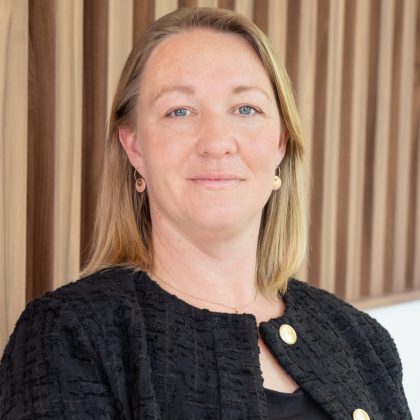
Anne-Mette Hermansen – Research Coordinator,
BC Children’s Hospital Research Institute, BC, Canada Anne-Mette has worked with Dr. Siden for many years in the role of Research Coordinator. She has been a part of research projects as a researcher, collaborator, student supervisor and admin support. Anne-Mette has a background in anthropology and especially enjoys diving deep into qualitative research methodologies and working closing with the families that are part of our studies.
Featured Article
Johannesen, J. & Angl, EN. (Hosts). (2024, January 3). Caregiving and Work (No. 41) [Audio podcast episode]. In Matters of Engagement Podcast. PodBean.
Commentary
We, the Siden Research Team, host a journal club for parents twice a year, to explore research topics and articles that are relevant to them and their children with medical complexity. Our conversations are rich, digesting how the research reflects our collective and individual lived experiences. We wrestle with research that has been published, acknowledging what is missing from the questions being asked, who is missing in being asked those questions, and how it translates into real world scenarios.
This recent session’s theme was on the notion of “The Labour of Caregiving,” recognizing that the act of caring for children with medical complexity goes beyond the role of mother or father, but is work, or labour, that is undertaken by the parent, or other guardian.
From the Canadian Centre for Caregiving Excellence, we learned that 1 in 4 people in Canada identify as a caregiver, and 1 in 2 will be a caregiver in their lifetime. Caregivers are unpaid family members, chosen family, friends and other supports for someone who needs care due to illness, disability or other. And while the health, social and economic impact of caregiving is immense in our society, caregivers remain unpaid and the impact of their work on the person they care for as well as the caregiver themselves, under-recognized.
Jennifer Johannesen of the Matters of Engagement podcast reflects on her experience of what she calls “extreme caregiving” in an episode the journal club listened to collectively. Jennifer differentiates between paid caregiving and “the extreme kind” she performed for years as caregiver to her son with medical complexities: “In addition to the money part, there’s still one more really big difference between work and extreme caregiving. And that is choice.”
Though us as parents would choose this again and again, to care for our children in extreme ways, there isn’t a choice offered to us to participate in this life. One day we find ourselves learning to care for stomas, blending food to be placed in a feeding tube, administering medication at intervals throughout the day, and driving to and from appointments each week. It is thrust upon us. While the labour of caregiving is not a choice, we do not consider it a burden to care for and love our child in this way. The “burden of caregiving” is felt in the hostile conditions within the health and social systems we navigate—not the child with disability of disease.
Notably, it is women who continue to provide the most caregiving, prompted by economic and public policies. Jennifer reflects on this situation as well: “What we do is just seen as an extension of unpaid domestic work and family responsibility, with the cost felt predominantly, but of course, not exclusively by the female in heteronormative pairings.” In another text that the journal club read and discussed, a pediatrician calls for acknowledgement of this situation and suggests that clinicians have “an obligation to advocate for expanded home nursing availability, paid caregiving for children with medical complexity by family members, universal paid family leave and increased job flexibility for patient’s families”. (The Gender Gap, Werner)
As we juxta-positioned research articles about the labour of caregiving (Osterud: “My child is my job now”) with more personal reflective pieces (Laura MacGregor: The Invisible Women and Matters of Engagement: Caregiving and Work), a question arose: Is research the right avenue for talking and writing about this topic? It seems apparent to our participating parents in journal club that research is needed to quantify and validate our experience, in a way that is digestible, acceptable, and effective in directing policy and system changes. But, in this academic process, the authentic voice of the parent, and child, can be lost. The ability to invoke an emotional response, to inspire empathy, is lessened. A deeply personal topic lends itself to personal modes of communication such as sharing one’s own story. Laura MacGregor did this in an artistic manner, raw and unfiltered, through a short story “The Invisible Woman.” This piece resonated deeply with our journal club participants who appreciated the writing as much as the light MacGregor shines on a commonly lived experience that is not often seen by the world.
The Parent Journal Club is a free forum and allows us to explore many alternate modes of communicating research or reflections, compared to the traditional journal article. Parents to children with medical complexity are not confined by academic constraints or traditions, and therefore we have often had the joy of seeing topics and themes represented in very engaging ways and the ability to arouse our human connection through shared experience and personal narratives.
References
- Østerud, K.L, Skjønsberg, E.E, Früh, E,A. “My child is my job now” – Care, work and careers of mothers with disabled children in the Norwegian welfare state. Social Science & Medicine, Volume 355, 2024, 117097, ISSN 0277-9536.
- CBC/Radio Canada. (2025, September 30). The invisible woman by Laura Macgregor | CBC books. CBCnews.
- Werner, K.M. “The gender gap in caring for children with medical complexity”. J Perinatol 43, 835–836 (2023).
This commentary was supported by Child-bright

TRENDS 2025; Special Edition 4: Parent Perspectives
Click the links below to view this months full list in desired format.



Mixed Media:
CBC/Radio Canada. (2025, September 30). The invisible woman by Laura Macgregor | CBC books. CBCnews.
Johannesen, J. & Angl, EN. (Hosts). (2024, January 3). Caregiving and Work (No. 41) [Audio podcast episode]. In Matters of Engagement Podcast. PodBean.
Articles:
Barrett, L., Peat, G., McLorie, E. V., et al (2025). Parents’ experiences of the financial and employment impacts of their child receiving end-of-life care: a national qualitative study. BMC palliative care, 24(1), 157.
Buckle, N., Doyle, O., Kodate, N., Kinch, M., & Somanadhan, S. (2024). Caregiver-Reported Economic Impacts of Pediatric Rare Diseases-A Scoping Review. Healthcare (Basel, Switzerland), 12(24), 2578.
Dillon-Wallace, J. A., McDonagh, S. H., & Fordham, L. A. (2014). Maternal Employment, Work Experiences, and Financial Well-Being of Australian Mothers Who Care for Young Children With Special Health Care Needs. Journal of Family Issues,37(3), 299-320.
Hauge, L. J., Kornstad, T., Nes, R. B., Kristensen, P., Irgens, L. M., Eskedal, L. T., Landolt, M. A., & Vollrath, M. E. (2013). The impact of a child’s special health care needs on maternal work participation during early motherhood. Paediatric and perinatal epidemiology, 27(4), 353–360.
Hope, S., Pearce, A., Whitehead, M., & Law, C. (2017). Effects of child long-term illness on maternal employment: longitudinal findings from the UK Millennium Cohort Study. European journal of public health, 27(1), 48–52.
Hirt, E., Wright, A., Kehring, A., Wang, Y., Toraño, V., & Boles, J. (2023). “Fitting the Pieces Together”: The Experiences of Caregivers of Children With Medical Complexity. Hospital pediatrics, 13(12), 1056–1066.
Mandic, C. G., Johaningsmeir, S., Corden, T. E., Earle, A., Acevedo-Garcia, D., & Gordon, J. B. (2016). Impact of caring for children with medical complexity on parents’ employment and time. Community, Work & Family, 20(4), 444–458.
Østerud, K.L, Skjønsberg, E.E, Früh, E,A. “My child is my job now” – Care, work and careers of mothers with disabled children in the Norwegian welfare state. Social Science & Medicine, Volume 355, 2024, 117097, ISSN 0277-9536.
Kellom, K. S., Wilson-Hall, C. L., Strane, D., Wu, K., & Matone, M. (2023). Employment and leave while parenting children with medical complexity. Families, systems & health : the journal of collaborative family healthcare, 41(2), 168–181.
Teicher J, Moore C, Esser K, et al. The Experience of Parental Caregiving for Children With Medical Complexity. Clinical Pediatrics. 2022;62(6):633-644.
Werner, K.M. “The gender gap in caring for children with medical complexity”. J Perinatol 43, 835–836 (2023).